Verse 1
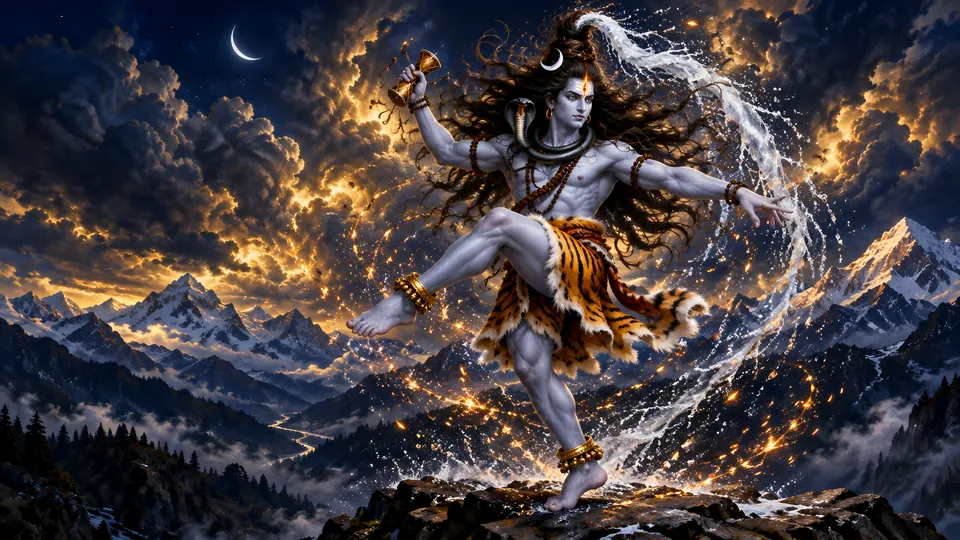
जटाटवीगलज्जलप्रवाहपावितस्थलेjaṭāṭavīgalajjalapravāhapāvitasthale
गलेऽवलम्ब्य लम्बितां भुजङ्गतुङ्गमालिकाम् ।gale'valambya lambitāṃ bhujaṅgatuṅgamālikām /
डमड्डमड्डमड्डमन्निनादवड्डमर्वयंḍamaḍḍamaḍḍamaḍḍamanninādavaḍḍamarvayaṃ
चकार चण्डताण्डवं तनोतु नः शिवः शिवम् ॥१॥cakāra caṇḍatāṇḍavaṃ tanotu naḥ śivaḥ śivam //
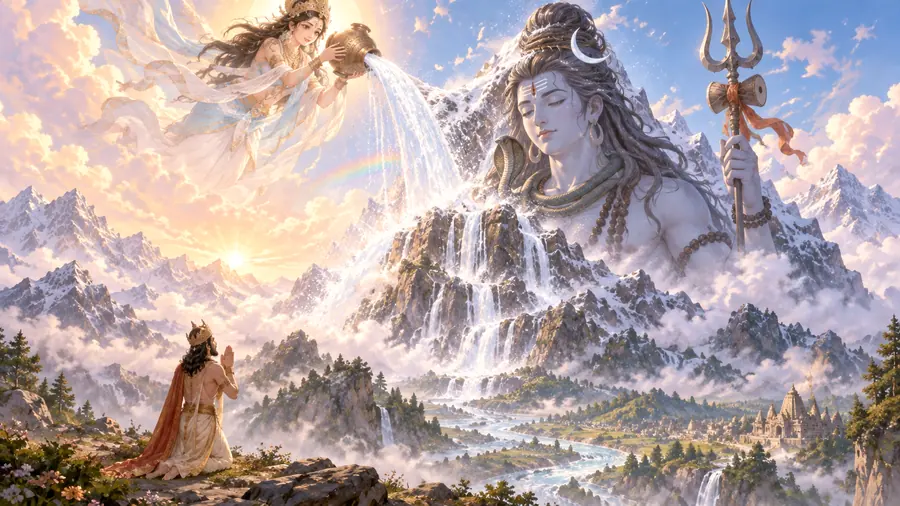
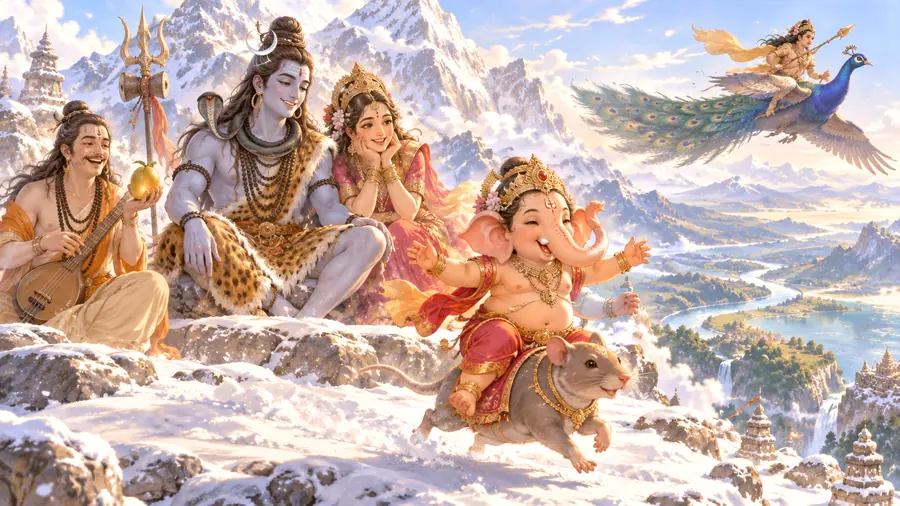
Meaning Water streams down from the forest of Shiva's matted locks and makes his neck holy. On that neck he hung a long, towering garland of serpents. His small drum, the damaru, sounded "damad, damad, damad, damad", and he danced the fierce Tandava. May that Shiva spread auspiciousness over us.
Verse 2
जटाकटाहसम्भ्रमभ्रमन्निलिम्पनिर्झरी-jaṭākaṭāhasambhramabhramannilimpanirjharī-
विलोलवीचिवल्लरीविराजमानमूर्द्धनि ।vilolavīcivallarīvirājamānamūrddhani /
धगद्धगद्धगज्ज्वलल्ललाटपट्टपावकेdhagaddhagaddhagajjvalallalāṭapaṭṭapāvake
किशोरचन्द्रशेखरे रतिः प्रतिक्षणं मम ॥२॥kiśoracandraśekhare ratiḥ pratikṣaṇaṃ mama //
Meaning The heavenly river, Ganga, whirls wildly in the deep cauldron of his matted hair, and her restless, creeper-like waves make his head shine. On the flat plate of his forehead a fire blazes, crackling "dhagad, dhagad, dhagad". On his crest he wears the young crescent moon. May my delight rest in this Shiva at every moment.
Verse 3
धराधरेन्द्रनन्दिनीविलासबन्धुबन्धुर-dharādharendranandinīvilāsabandhubandhura-
स्फुरद्दिगन्तसन्ततिप्रमोदमानमानसे ।sphuraddigantasantatipramodamānamānase /
कृपाकटाक्षधोरणीनिरुद्धदुर्धरापदिkr̥pākaṭākṣadhoraṇīniruddhadurdharāpadi
क्वचिद्दिगम्बरे मनो विनोदमेतु वस्तुनि ॥३॥kvaciddigambare mano vinodametu vastuni //
Meaning He is lovely as the companion of the playful grace of Parvati, daughter of the king of mountains, and his mind rejoices in the shining expanse of all the directions. The stream of his compassionate sidelong glances holds back calamities that are hard to bear. May my mind, at some moment, find its joy in that divine reality, the one clothed only in the directions.
Verse 4
जटाभुजङ्गपिङ्गलस्फुरत्फणामणिप्रभा-jaṭābhujaṅgapiṅgalasphuratphaṇāmaṇiprabhā-
कदम्बकुङ्कुमद्रवप्रलिप्तदिग्वधूमुखे ।kadambakuṅkumadravapraliptadigvadhūmukhe /
मदान्धसिन्धुरस्फुरत्त्वगुत्तरीयमेदुरेmadāndhasindhurasphurattvaguttarīyamedure
मनो विनोदमद्भुतं बिभर्तु भूतभर्तरि ॥४॥mano vinodamadbhutaṃ bibhartu bhūtabhartari //
Meaning The serpents in his matted hair have gleaming, tawny hoods, and the cluster of light from the jewels on those hoods spreads like liquid saffron over the faces of the directions, pictured as young women. He is made splendid by his upper garment, the glistening hide of an elephant blinded by rut. May my mind hold a wondrous delight in him, the sustainer of all beings.
Verse 5
सहस्रलोचनप्रभृत्यशेषलेखशेखर-sahasralocanaprabhr̥tyaśeṣalekhaśekhara-
प्रसूनधूलिधोरणीविधूसराङ्घ्रिपीठभूः ।prasūnadhūlidhoraṇīvidhūsarāṅghripīṭhabhūḥ /
भुजङ्गराजमालया निबद्धजाटजूटकःbhujaṅgarājamālayā nibaddhajāṭajūṭakaḥ
श्रियै चिराय जायतां चकोरबन्धुशेखरः ॥५॥śriyai cirāya jāyatāṃ cakorabandhuśekharaḥ //
Meaning Indra, the thousand-eyed, and all the other gods bow before him, and streams of pollen from the flowers on their heads turn the ground of his footstool grey. His knot of matted hair is bound with a garland made of the king of serpents. On his crest he wears the moon, friend of the chakora bird. May he bring lasting good fortune.
Verse 6
ललाटचत्वरज्वलद्धनञ्जयस्फुलिङ्गभा-lalāṭacatvarajvaladdhanañjayasphuliṅgabhā-
निपीतपञ्चसायकं नमन्निलिम्पनायकम् ।nipītapañcasāyakaṃ namannilimpanāyakam /
सुधामयूखलेखया विराजमानशेखरंsudhāmayūkhalekhayā virājamānaśekharaṃ
महाकपालि सम्पदे शिरो जटालमस्तु नः ॥६॥mahākapāli sampade śiro jaṭālamastu naḥ //
Meaning On the open square of his forehead a fire blazes, and the glow of its sparks drank up Kama, the god of the five arrows. The lords of the gods bow before that head, and its crest shines with a slender streak of the nectar-rayed moon. May that head with matted locks, the head of the great skull-bearer, be for our prosperity.
Verse 7
करालभालपट्टिकाधगद्धगद्धगज्ज्वल-karālabhālapaṭṭikādhagaddhagaddhagajjvala-
द्धनञ्जयाहुतीकृतप्रचण्डपञ्चसायके ।ddhanañjayāhutīkr̥tapracaṇḍapañcasāyake /
धराधरेन्द्रनन्दिनीकुचाग्रचित्रपत्रक-dharādharendranandinīkucāgracitrapatraka-
प्रकल्पनैकशिल्पिनि त्रिलोचने रतिर्मम ॥७॥prakalpanaikaśilpini trilocane ratirmama //
Meaning On the fearsome plate of his forehead a fire roars and blazes, "dhagad-dhagad", and into it the fierce Kama, god of the five arrows, was offered as an oblation. He is also the one matchless artist who draws decorative leaf-patterns on the breasts of Parvati, daughter of the king of mountains. My delight is in him, the three-eyed one.
Verse 8
नवीनमेघमण्डलीनिरुद्धदुर्धरस्फुरत्-navīnameghamaṇḍalīniruddhadurdharasphurat-
कुहूनिशीथिनीतमःप्रबन्धबद्धकन्धरः ।kuhūniśīthinītamaḥprabandhabaddhakandharaḥ /
निलिम्पनिर्झरीधरस्तनोतु कृत्तिसिन्धुरःnilimpanirjharīdharastanotu kr̥ttisindhuraḥ
कलानिधानबन्धुरः श्रियं जगद्धुरन्धरः ॥८॥kalānidhānabandhuraḥ śriyaṃ jagaddhurandharaḥ //
Meaning His neck is dark, bound as if by the dense, impenetrable blackness of a moonless midnight hemmed in by a ring of fresh rain clouds. He carries the river of the gods, Ganga, wears the hide of an elephant, is made lovely by the moon, and bears the burden of the whole world. May he spread prosperity.
Verse 9
प्रफुल्लनीलपङ्कजप्रपञ्चकालिमप्रभा-praphullanīlapaṅkajaprapañcakālimaprabhā-
ऽवलम्बिकण्ठकन्दलीरुचिप्रबद्धकन्धरम् ।'valambikaṇṭhakandalīruciprabaddhakandharam /
स्मरच्छिदं पुरच्छिदं भवच्छिदं मखच्छिदंsmaracchidaṃ puracchidaṃ bhavacchidaṃ makhacchidaṃ
गजच्छिदान्धकच्छिदं तमन्तकच्छिदं भजे ॥९॥gajacchidāndhakacchidaṃ tamantakacchidaṃ bhaje //
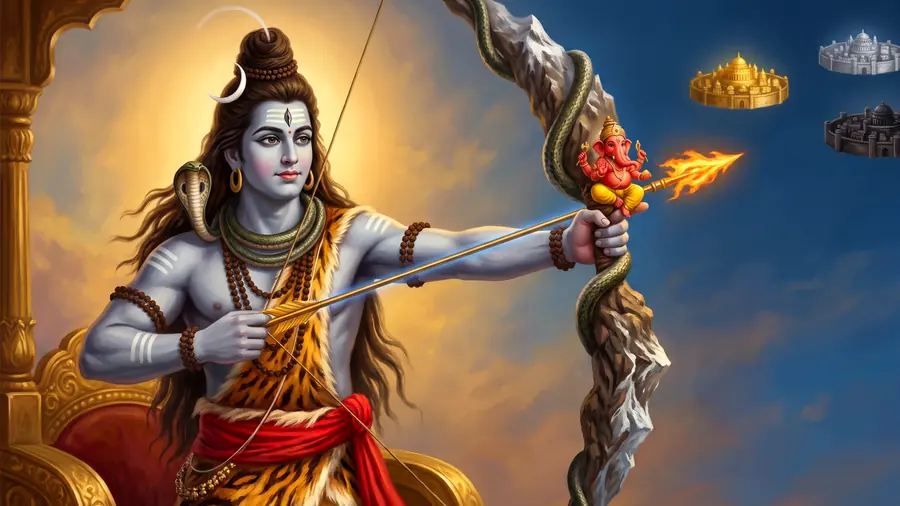
Meaning His neck is bound in the lustre of his throat, which holds a dark radiance like a spread of fully opened blue lotuses. I worship him who cut down Kama, cut down the three cities, cuts through worldly existence, cut down Daksha's sacrifice, cut down the elephant demon and the demon Andhaka, and cut down Antaka, Death himself.
Verse 10
अखर्वसर्वमङ्गलाकलाकदम्बमञ्जरी-akharvasarvamaṅgalākalākadambamañjarī-
रसप्रवाहमाधुरीविजृम्भणामधुव्रतम् ।rasapravāhamādhurīvijr̥mbhaṇāmadhuvratam /
स्मरान्तकं पुरान्तकं भवान्तकं मखान्तकंsmarāntakaṃ purāntakaṃ bhavāntakaṃ makhāntakaṃ
गजान्तकान्धकान्तकं तमन्तकान्तकं भजे ॥१०॥gajāntakāndhakāntakaṃ tamantakāntakaṃ bhaje //
Meaning He is a bee delighting in the swelling sweetness of the flowing nectar from the blossom-cluster of the many graces of the great Sarvamangala, Parvati. I worship him who ended Kama, ended the three cities, ends worldly existence, ended Daksha's sacrifice, ended the elephant demon and the demon Andhaka, and is the ender of Antaka, Death himself.
Verse 11
जयत्वदभ्रविभ्रमभ्रमद्भुजङ्गमश्वस-jayatvadabhravibhramabhramadbhujaṅgamaśvasa-
द्विनिर्गमत्क्रमस्फुरत्करालभालहव्यवाट् ।dvinirgamatkramasphuratkarālabhālahavyavāṭ /
धिमिद्धिमिद्धिमिद्ध्वनन्मृदङ्गतुङ्गमङ्गल-dhimiddhimiddhimiddhvananmr̥daṅgatuṅgamaṅgala-
ध्वनिक्रमप्रवर्तितप्रचण्डताण्डवः शिवः ॥११॥dhvanikramapravartitapracaṇḍatāṇḍavaḥ śivaḥ //
Meaning Victory to Shiva! The fire on his terrible forehead flares up in waves, fanned by the breath hissing out of the serpents that whirl around him in vast, wild circles. His fierce Tandava is set in motion, beat after beat, by the loud, auspicious sound of the mridanga drum ringing 'dhimid-dhimid-dhimid'.
Verse 12
दृषद्विचित्रतल्पयोर्भुजङ्गमौक्तिकस्रजोर्-dr̥ṣadvicitratalpayorbhujaṅgamauktikasrajor-
गरिष्ठरत्नलोष्ठयोः सुहृद्विपक्षपक्षयोः ।gariṣṭharatnaloṣṭhayoḥ suhr̥dvipakṣapakṣayoḥ /
तृणारविन्दचक्षुषोः प्रजामहीमहेन्द्रयोःtr̥ṇāravindacakṣuṣoḥ prajāmahīmahendrayoḥ
समप्रवृत्तिकः कदा सदाशिवं भजाम्यहम् ॥१२॥samapravr̥ttikaḥ kadā sadāśivaṃ bhajāmyaham //
Meaning A stone and a splendid bed, a serpent and a string of pearls, the costliest jewel and a clod of earth, friend and the camp of foes, a blade of grass and a lotus-eyed beauty, the common people and the great ruler of the earth: when, holding the same attitude towards all of them, will I worship Sadashiva?
Verse 13
कदा निलिम्पनिर्झरीनिकुञ्जकोटरे वसन्kadā nilimpanirjharīnikuñjakoṭare vasan
विमुक्तदुर्मतिः सदा शिरःस्थमञ्जलिं वहन् ।vimuktadurmatiḥ sadā śiraḥsthamañjaliṃ vahan /
विलोललोललोचनो ललामभाललग्नकःvilolalolalocano lalāmabhālalagnakaḥ
शिवेति मन्त्रमुच्चरन् कदा सुखी भवाम्यहम् ॥१३॥śiveti mantramuccaran kadā sukhī bhavāmyaham //
Meaning When will I dwell in a hollow among the bowers beside the heavenly river, the Ganga, freed from evil thoughts, always holding my joined palms upon my head? With restless, wandering eyes, clinging to him whose forehead bears the lovely mark, chanting the mantra 'Shiva', when will I become truly happy?
Verse 14
निलिम्पनाथनागरीकदम्बमौलमल्लिका-nilimpanāthanāgarīkadambamaulamallikā-
निगुम्फनिर्भरक्षरन्मधूष्णिकामनोहरः ।nigumphanirbharakṣaranmadhūṣṇikāmanoharaḥ /
तनोतु नो मनोमुदं विनोदिनीमहर्निशंtanotu no manomudaṃ vinodinīmaharniśaṃ
परश्रियः परं पदं तदङ्गजत्विषां चयः ॥१४॥paraśriyaḥ paraṃ padaṃ tadaṅgajatviṣāṃ cayaḥ //
Meaning Charming with the fragrant nectar that drips in abundance from the jasmine garlands woven into the hair of the many women of Indra's heavenly city, may the gathered radiance born of Shiva's limbs, the highest abode of supreme splendour, spread a playful joy in our minds, day and night.
Verse 15
प्रचण्डवाडवानलप्रभाशुभप्रचारणीpracaṇḍavāḍavānalaprabhāśubhapracāraṇī
महाष्टसिद्धिकामिनीजनाऽवहूतजल्पना ।mahāṣṭasiddhikāminījanā'vahūtajalpanā /
विमुक्तवामलोचनाविवाहकालिकध्वनिःvimuktavāmalocanāvivāhakālikadhvaniḥ
शिवेति मन्त्रभूषणा जगज्जयाय जायताम् ॥१५॥śiveti mantrabhūṣaṇā jagajjayāya jāyatām //
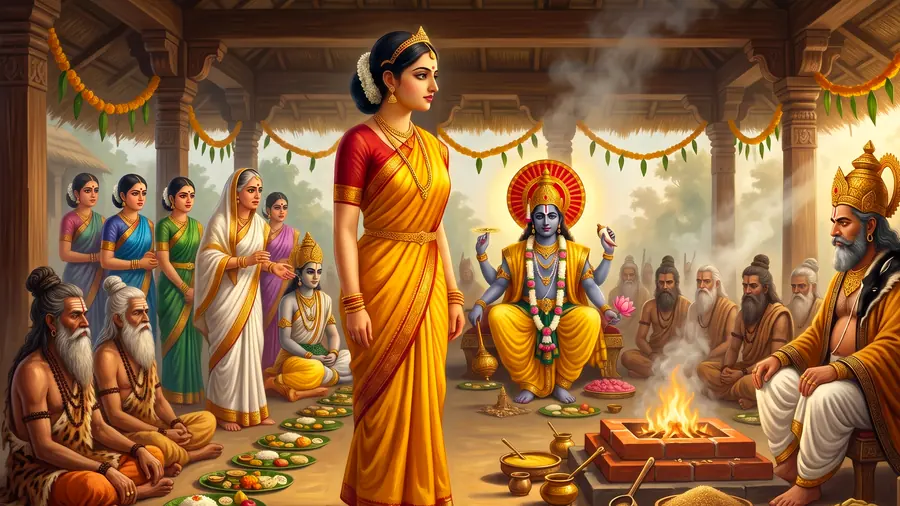
Meaning Spreading auspiciousness like the blaze of the fierce fire beneath the ocean; the chant raised by the women who are the eight great siddhis, the powers; the sound that rang out at the wedding of the lovely-eyed Parvati: may this chant, adorned with the mantra 'Shiva', arise for the victory of the world.