Doha 1
श्रीगुरु चरन सरोज रज निज मनु मुकुरु सुधारि ।śrīguru carana saroja raja nija manu mukuru sudhāri /
बरनउँ रघुबर बिमल जसु जो दायकु फल चारि ।baranaũ raghubara bimala jasu jo dāyaku phala cāri /
Meaning With the dust of my guru's lotus feet I first polish the mirror of my own mind. Then I describe the spotless glory of Raghubar, Rama, the glory that grants all four fruits of life: right living, wealth, fulfilled desire and liberation.
Doha 2
बुद्धिहीन तनु जानिके सुमिरौं पवन-कुमार ।buddhihīna tanu jānike sumirauṃ pavana-kumāra /
बल बुद्धि बिद्या देहु मोहिं हरहु कलेस बिकार ।bala buddhi bidyā dehu mohiṃ harahu kalesa bikāra /
Meaning Knowing myself, in this body, to be lacking in understanding, I remember you, Pavankumar, son of the wind. Grant me strength, wisdom and learning, and take away my afflictions and the impurities of my mind.
Chaupai 1
जय हनुमान ज्ञान गुन सागर ।jaya hanumāna jñāna guna sāgara /
जय कपीस तिहुँ लोक उजागर ।jaya kapīsa tihũ loka ujāgara /
Meaning Victory to you, Hanuman, you who are an ocean of knowledge and good qualities. Victory to you, Kapisha, lord of the monkeys, whose glory shines out and is known across all three worlds.
Chaupai 2
राम दूत अतुलित बल धामा ।rāma dūta atulita bala dhāmā /
अंजनि-पुत्र पवनसुत नामा ।aṃjani-putra pavanasuta nāmā /
Meaning You are Rama's messenger, a home of strength that nothing can equal. You are known by the names Anjaniputra, son of Mother Anjani, and Pavanasut, son of the wind god.
Chaupai 3
महाबीर बिक्रम बजरंगी ।mahābīra bikrama bajaraṃgī /
कुमति निवार सुमति के संगी ।kumati nivāra sumati ke saṃgī /
Meaning You are the great hero, full of valour, with a body as strong as a thunderbolt, and so you are called Bajrangi. You drive away bad thinking and stand as a companion to those whose understanding is good.
Chaupai 4
कंचन बरन बिराज सुबेसा ।kaṃcana barana birāja subesā /
कानन कुंडल कुंचित केसा ।kānana kuṃḍala kuṃcita kesā /
Meaning Your body glows with the colour of gold, and you look splendid in fine clothing. Kundal earrings hang from your ears, and your hair is soft and curling.
Chaupai 5
हाथ बज्र औ ध्वजा बिराजै ।hātha bajra au dhvajā birājai /
काँधे मूँज जनेऊ साजै ।kā̃dhe mū̃ja janeū sājai /
Meaning In your hands shine the vajra, the thunderbolt, and a banner. Across your shoulder lies a sacred thread of munj grass.
Chaupai 6
संकर सुवन केसरीनंदन ।saṃkara suvana kesarīnaṃdana /
तेज प्रताप महा जग बंदन ।teja pratāpa mahā jaga baṃdana /
Meaning You are born of Shankara, Lord Shiva, and you are the beloved son of Kesari. Your radiance and might are so great that the whole world bows to you in reverence.
Chaupai 7
विद्यावान गुनी अति चातुर ।vidyāvāna gunī ati cātura /
राम काज करिबे को आतुर ।rāma kāja karibe ko ātura /
Meaning You are rich in learning, full of good qualities and exceedingly wise and skilful. You are always eager, even restless, to carry out the work of Rama.
Chaupai 8
प्रभु चरित्र सुनिबे को रसिया ।prabhu caritra sunibe ko rasiyā /
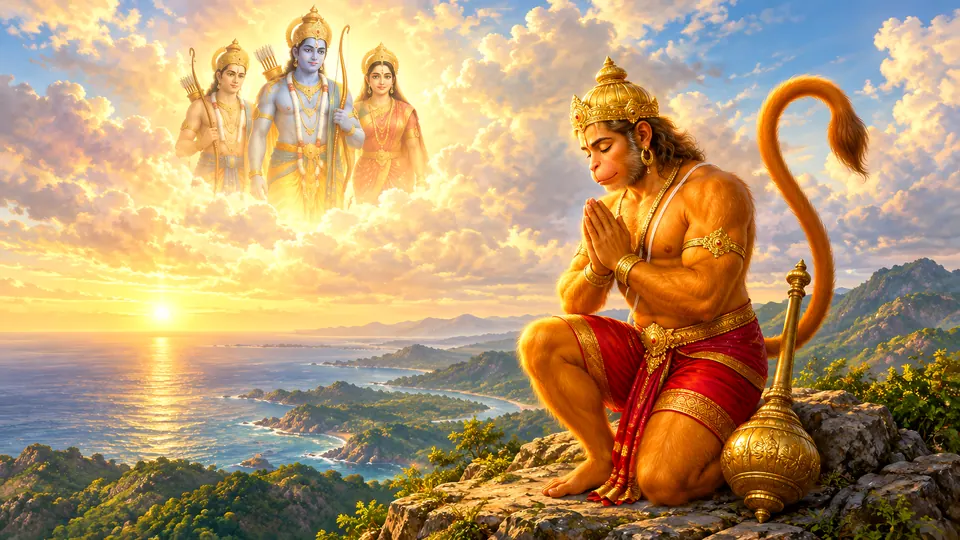
राम लखन सीता मन बसिया ।rāma lakhana sītā mana basiyā /
Meaning You delight in hearing the story of your Lord's deeds. Rama, Lakshmana and Sita dwell always in your heart.
Chaupai 9
सूक्ष्म रूप धरि सियहिं दिखावा ।sūkṣma rūpa dhari siyahiṃ dikhāvā /
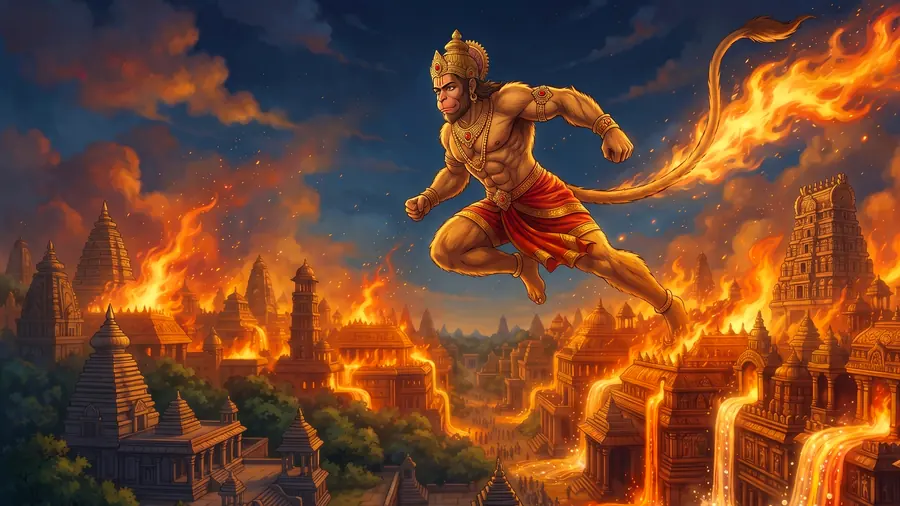
बिकट रूप धरि लंक जरावा ।bikaṭa rūpa dhari laṃka jarāvā /
Meaning Taking a tiny form, you showed yourself to Sita, held captive in Lanka. Then, taking a vast and fearsome form, you set the city of Lanka ablaze.
Chaupai 10
भीम रूप धरि असुर सँहारे ।bhīma rūpa dhari asura sãhāre /
रामचंद्र के काज सँवारे ।rāmacaṃdra ke kāja sãvāre /
Meaning Taking on a terrifying and immense form, you struck down the asuras, the demons. So you brought every task of Ramachandra to its successful completion.
Chaupai 11
लाय सजीवन लखन जियाये ।lāya sajīvana lakhana jiyāye /
श्रीरघुबीर हरषि उर लाये ।śrīraghubīra haraṣi ura lāye /
Meaning You brought the sanjivani, the life-restoring herb, and revived Lakshmana when he lay struck down. Overjoyed, Shri Raghubir, Rama, held you close to his heart.
Chaupai 12
रघुपति कीन्ही बहुत बड़ाई ।raghupati kīnhī bahuta baṛāī /
तुम मम प्रिय भरतहि सम भाई ।tuma mama priya bharatahi sama bhāī /
Meaning Raghupati, Rama, praised you again and again, speaking highly of all you had done. He told you, 'You are as dear to me as my own brother Bharata.'
Chaupai 13
सहस बदन तुम्हरो जस गावैं ।sahasa badana tumharo jasa gāvaiṃ /
अस कहि श्रीपति कंठ लगावैं ।asa kahi śrīpati kaṃṭha lagāvaiṃ /
Meaning 'Even Shesha, the thousand-mouthed serpent, sings your glory,' said Shripati, Rama, lord of Lakshmi, and as he said this he drew you close and embraced you.
Chaupai 14
सनकादिक ब्रह्मादि मुनीसा ।sanakādika brahmādi munīsā /
नारद सारद सहित अहीसा ।nārada sārada sahita ahīsā /
Meaning Sanaka and his fellow sages, Brahma and the other gods, the foremost of munis, Narada, Sharada the goddess of speech, together with Ahisha, lord of serpents (the line continues in the next chaupai)…
Chaupai 15
जम कुबेर दिगपाल जहाँ ते ।jama kubera digapāla jahā̃ te /
कबि कोबिद कहि सके कहाँ ते ।kabi kobida kahi sake kahā̃ te /
Meaning …along with Yama, lord of death, Kubera, lord of wealth, and the guardians of all the directions: even they cannot fully tell your glory. How then could poets and learned scholars ever describe it?
Chaupai 16
तुम उपकार सुग्रीवहिं कीन्हा ।tuma upakāra sugrīvahiṃ kīnhā /
राम मिलाय राज पद दीन्हा ।rāma milāya rāja pada dīnhā /
Meaning You did Sugriva a great service. You brought him to meet Rama, and through that meeting he was given the throne and the rank of king.
Chaupai 17
तुम्हरो मंत्र बिभीषन माना ।tumharo maṃtra bibhīṣana mānā /
लंकेस्वर भए सब जग जाना ।laṃkesvara bhae saba jaga jānā /
Meaning Vibhishana took your counsel to heart and acted on it. Because of that he became Lankeshwar, the king of Lanka, and the entire world came to know of it.
Chaupai 18
जुग सहस्त्र जोजन पर भानू ।juga sahastra jojana para bhānū /
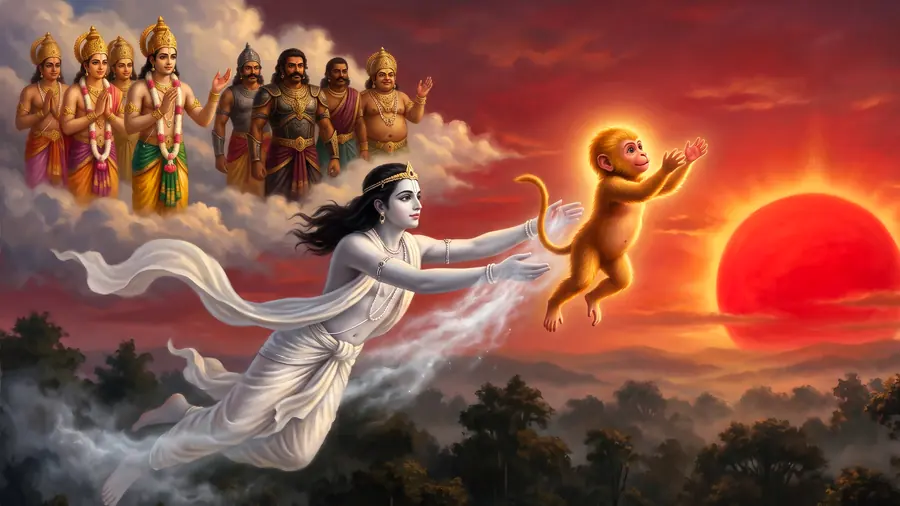
लील्यो ताहि मधुर फल जानू ।līlyo tāhi madhura phala jānū /
Meaning The sun stands thousands upon thousands of yojanas away, yet you swallowed it, taking it for a sweet fruit.
Chaupai 19
प्रभु मुद्रिका मेलि मुख माहीं ।prabhu mudrikā meli mukha māhīṃ /
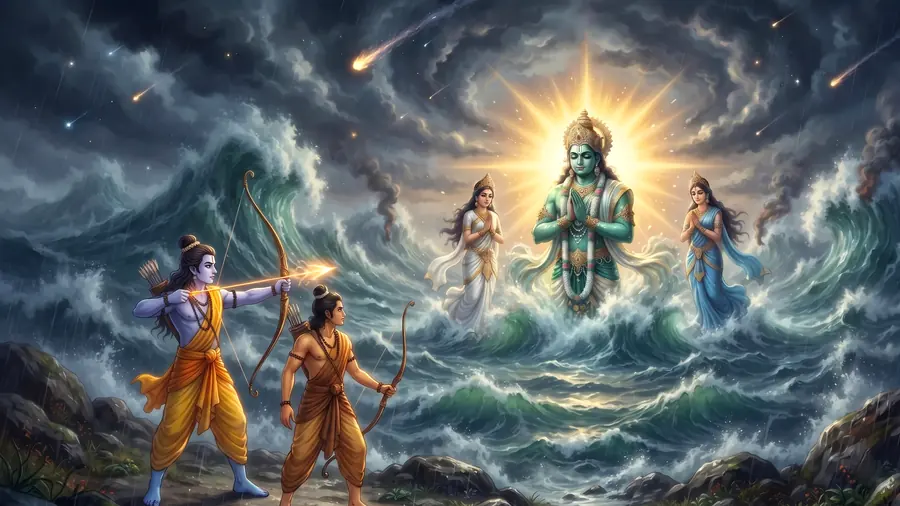
जलधि लाँघि गये अचरज नाहीं ।jaladhi lā̃ghi gaye acaraja nāhīṃ /
Meaning Holding the Lord's ring in your mouth, you leapt across the ocean. For one like you, there is nothing surprising in that.
Chaupai 20
दुर्गम काज जगत के जेते ।durgama kāja jagata ke jete /
सुगम अनुग्रह तुम्हरे तेते ।sugama anugraha tumhare tete /
Meaning Whatever tasks in this world are hard to achieve, every one of them becomes easy by your grace.
Chaupai 21
राम दुआरे तुम रखवारे ।rāma duāre tuma rakhavāre /
होत न आज्ञा बिनु पैसारे ।hota na ājñā binu paisāre /
Meaning You stand as the keeper of Rama's door. No one can enter there without your permission.
Chaupai 22
सब सुख लहै तुम्हारी सरना ।saba sukha lahai tumhārī saranā /
तुम रच्छक काहू को डर ना ।tuma racchaka kāhū ko ḍara nā /
Meaning Whoever takes refuge in you gains every happiness. When you are the protector, there is no one to fear.
Chaupai 23
आपन तेज सम्हारो आपै ।āpana teja samhāro āpai /
तीनों लोक हाँक तें काँपै ।tīnoṃ loka hā̃ka teṃ kā̃pai /
Meaning Only you yourself can hold your own radiance in check. When you let out your mighty roar, all three worlds tremble.
Chaupai 24
भूत पिसाच निकट नहिं आवै ।bhūta pisāca nikaṭa nahiṃ āvai /
महाबीर जब नाम सुनावै ।mahābīra jaba nāma sunāvai /
Meaning Ghosts and evil spirits do not come near when the name of Mahavir, the great hero, is spoken.
Chaupai 25
नासै रोग हरै सब पीरा ।nāsai roga harai saba pīrā /
जपत निरंतर हनुमत बीरा ।japata niraṃtara hanumata bīrā /
Meaning For the one who chants the name of the brave Hanuman without pause, disease is destroyed and all suffering is taken away.
Chaupai 26
संकट तें हनुमान छुड़ावै ।saṃkaṭa teṃ hanumāna chuṛāvai /
मन क्रम बचन ध्यान जो लावै ।mana krama bacana dhyāna jo lāvai /
Meaning Hanuman frees from every crisis the one who keeps him in meditation, in thought, in deed and in word.
Chaupai 27
सब पर राम तपस्वी राजा ।saba para rāma tapasvī rājā /
तिन के काज सकल तुम साजा ।tina ke kāja sakala tuma sājā /
Meaning Rama, the king who lived as an ascetic, is supreme over all. And it is you who accomplished every one of his works.
Chaupai 28
और मनोरथ जो कोई लावै ।aura manoratha jo koī lāvai /
सोइ अमित जीवन फल पावै ।soi amita jīvana phala pāvai /
Meaning Whoever brings any other wish or longing to you attains it, and receives the boundless fruit of life.
Chaupai 29
चारों जुग परताप तुम्हारा ।cāroṃ juga paratāpa tumhārā /
है परसिद्ध जगत उजियारा ।hai parasiddha jagata ujiyārā /
Meaning Your glory has endured through all four yugas, the four ages of the world. It is renowned everywhere and lights up the whole world.
Chaupai 30
साधु संत के तुम रखवारे ।sādhu saṃta ke tuma rakhavāre /
असुर निकंदन राम दुलारे ।asura nikaṃdana rāma dulāre /
Meaning You are the guardian of the good and of saints. You root out the asuras, the demons, and you are dearly loved by Rama.
Chaupai 31
अष्ट सिद्धि नौ निधि के दाता ।aṣṭa siddhi nau nidhi ke dātā /
अस बर दीन जानकी माता ।asa bara dīna jānakī mātā /
Meaning You are the giver of the eight siddhis, extraordinary powers, and the nine nidhis, divine treasures. It was Mother Janaki, Sita herself, who blessed you with this boon.
Chaupai 32
राम रसायन तुम्हरे पासा ।rāma rasāyana tumhare pāsā /
सदा रहो रघुपति के दासा ।sadā raho raghupati ke dāsā /
Meaning You hold the rasayan of Rama, the life-giving elixir of devotion to him. May you always remain the servant of Raghupati, Rama.
Chaupai 33
तुम्हरे भजन राम को पावै ।tumhare bhajana rāma ko pāvai /
जनम जनम के दुख बिसरावै ।janama janama ke dukha bisarāvai /
Meaning Through devotion to you, a person reaches Rama, and the sorrows of birth after birth are forgotten.
Chaupai 34
अंत काल रघुबर पुर जाई ।aṃta kāla raghubara pura jāī /
जहाँ जन्म हरि-भक्त कहाई ।jahā̃ janma hari-bhakta kahāī /
Meaning At the end of life such a person goes to the city of Raghubar, Rama's own abode. And wherever he is born again, he is known as a devotee of Hari.
Chaupai 35
और देवता चित्त न धरई ।aura devatā citta na dharaī /
हनुमत सेइ सर्ब सुख करई ।hanumata sei sarba sukha karaī /
Meaning Even one who keeps no other deity in mind gains every happiness by serving Hanuman.
Chaupai 36
संकट कटै मिटै सब पीरा ।saṃkaṭa kaṭai miṭai saba pīrā /
जो सुमिरै हनुमत बलबीरा ।jo sumirai hanumata balabīrā /
Meaning Whoever remembers Hanuman, the mighty hero, finds every crisis cut away and every pain wiped clean.
Chaupai 37
जै जै जै हनुमान गोसाईं ।jai jai jai hanumāna gosāīṃ /
कृपा करहु गुरु देव की नाईं ।kr̥pā karahu guru deva kī nāīṃ /
Meaning Victory, victory, victory to you, Lord Hanuman, my master! Bestow your grace on me as a guru would.
Chaupai 38
जो सत बार पाठ कर कोई ।jo sata bāra pāṭha kara koī /
छूटहि बंदि महा सुख होई ।chūṭahi baṃdi mahā sukha hoī /
Meaning Whoever recites this a hundred times is set free from bondage and gains great happiness.
Chaupai 39
जो यह पढ़ै हनुमान चलीसा ।jo yaha paṛhai hanumāna calīsā /
होय सिद्धि साखी गौरीसा ।hoya siddhi sākhī gaurīsā /
Meaning Whoever reads this Hanuman Chalisa attains siddhi, fulfilment. Gaurisha, Lord Shiva, the husband of Gauri, is witness to this.
Chaupai 40
तुलसीदास सदा हरि चेरा ।tulasīdāsa sadā hari cerā /
कीजै नाथ हृदय महँ डेरा ।kījai nātha hr̥daya mahã ḍerā /
Meaning Tulsidas is forever the servant of Hari. O Lord, make your dwelling in my heart.
Doha 3
पवनतनय संकट हरन मंगल मूरति रूप ।pavanatanaya saṃkaṭa harana maṃgala mūrati rūpa /
राम लखन सीता सहित हृदय बसहु सुर भूप ।rāma lakhana sītā sahita hr̥daya basahu sura bhūpa /
Meaning O son of the wind, remover of troubles, whose very form is auspicious: O king among the gods, dwell in my heart together with Rama, Lakshmana and Sita.