Spritual
Spritual
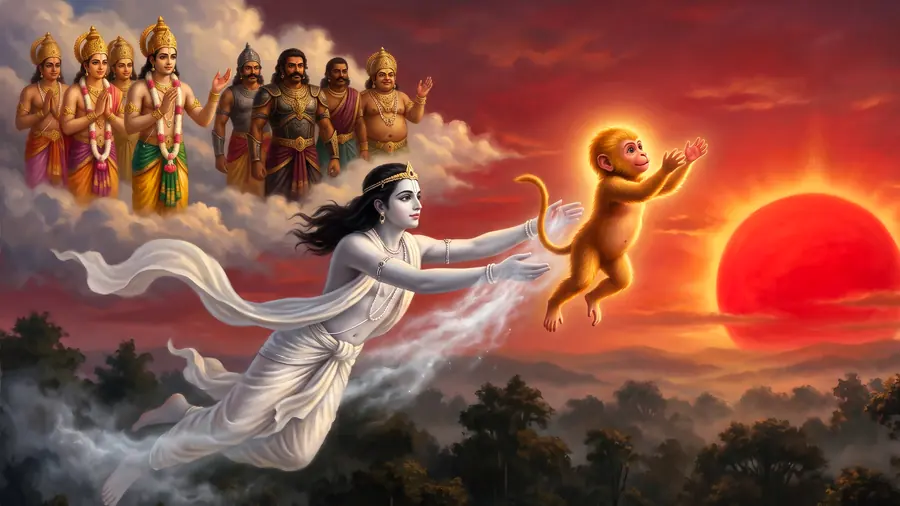
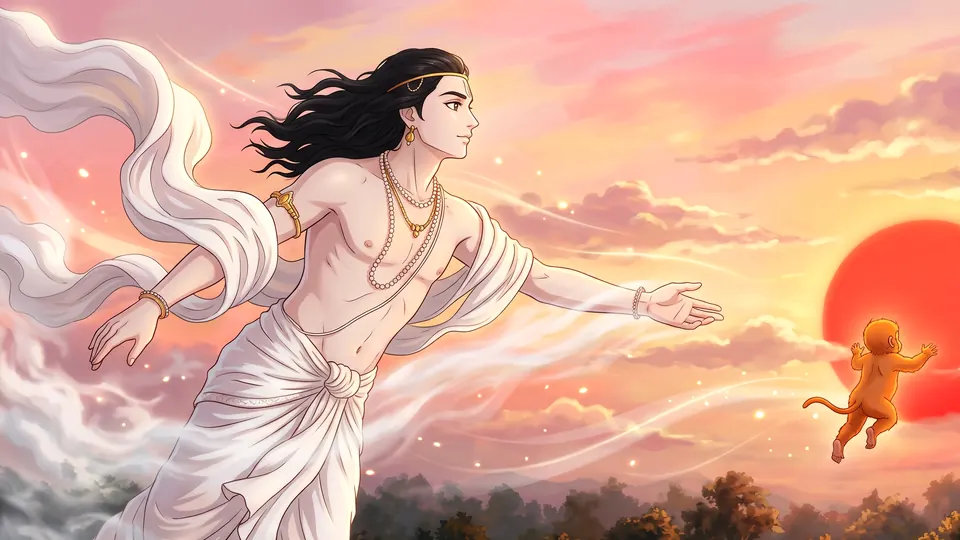
Vayu, the Wind, pearl-pale with long black hair and a white cloth streaming into mist, flies over the dawn forest with one long arm reaching after his newborn son, who leaps toward the huge hibiscus-red rising sun.

Ramayana

Vayu

वायु

Pavana · Maruta

Vayu, the Wind, also called Maruta and Pavana, has no body of his own; Brahma says he moves within every body as its breath, and without him a body is no more than wood. He loved Anjana, wife of the vanara Kesari, came to her in mind alone, and promised her a son his equal in leaping: Hanuman.

Read more

When the child leapt at the sun he flew after him, cool as snow. When Indra’s thunderbolt struck the boy down, he withdrew into a cave and all breath stopped, until Brahma brought the child back to life. On this site the mountain Mainaka remembers how he once carried it to safety in the sea, and in Lanka he blows cool on his son’s burning tail.

  • 1 story
  • 9 scenes
  • 8 min read

Stories with Vayu

RamayanaKishkindha Kanda

Hanuman and the sun: Hanuman reaches for the sun

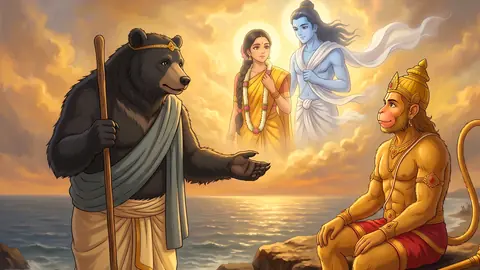
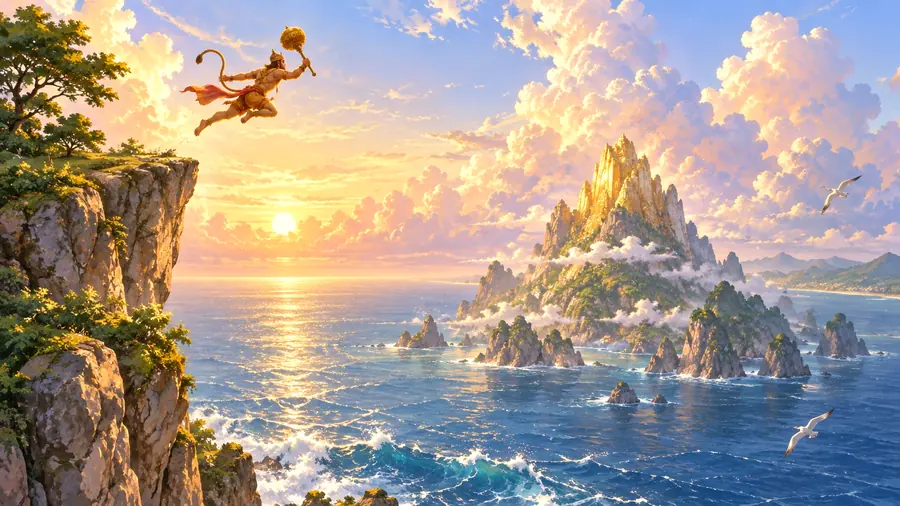
A newborn sees the rising sun, takes it for a fruit, and leaps. Years later, on a hopeless shore, old Jambavan reminds him who he is.
  • 8 min
  • Fearlessness
  • Hope

Names

Vayu. Also known as: Pavana, Maruta.

Where this comes from

What this page about Vayu was checked against: each point, and where it is found.
  1. Names Vayu, Maruta, Pavana (title “Pavana · Maruta”): Kishkindha 4.66.12 (maruta), 4.66.14 (pavana), 4.66.25 (vayu, also gandhavaha and prabhanjana), Kishkindha 4.67.10 (maruta); Uttara 7.35.48 (pavana), 7.35.65 (sadagati). Sources of the story “Hanuman and the sun”
  2. Has no body of his own, moves within every body as breath; without him a body is like wood: Brahma’s words, Uttara 7.35.60-62 (asharirah sharireshu vayush charati palayan; vayuh pranah). Sources of the story “Hanuman and the sun”
  3. Loved Anjana, wife of Kesari; came to her in mind alone; promised a son, mighty and wise, his equal in leaping: Kishkindha 4.66.8-19. Father of Hanuman: 4.66.20, 4.66.29-30 (aurasa son of Maruta); Uttara 7.35.20. Sources of the story “Hanuman and the sun”
  4. Flew after the child toward the sun, cool as heaped snow, to keep the sun from burning him: Uttara 7.35.28. Sources of the story “Hanuman and the sun”
  5. When Indra’s thunderbolt struck the boy down he withdrew into a cave with him and all breath stopped: Uttara 7.35.48-52 and 7.35.59; Kishkindha 4.66.25 (he did not blow in the three worlds). Sources of the story “Hanuman and the sun”
  6. Brahma brought the child back to life and the Wind moved again in all beings: Uttara 7.36.1-6. Sources of the story “Hanuman and the sun”
  7. Carried Mainaka to safety in the sea when Indra cut the mountains’ wings: Sundara 5.1.126-127 (kshiptah shvasanena; tava pitra abhirakshitah). Sources of the story “Hanuman and the sun”
  8. Blew cool as snow-wind beside his son’s burning tail in Lanka: Sundara 5.53.33 (hanumaj-janakash chapi … praleyanila-shitalah). Sources of the story “Hanuman and the sun”

Reading comfort

Text size
Colour

Colour waits while Night Lamp is on.

Motion

Light mode keeps the paintings still, with one slow drift and no depth effect. Easier on older phones and batteries.

Night Lamp

Warm amber text on near-black. Paintings fade slowly and hold still.

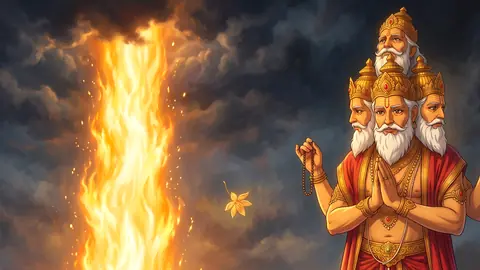
Rama turned to his teacher and asked for the knowledge of withdrawal.

Saved on this device.