Spritual
Spritual
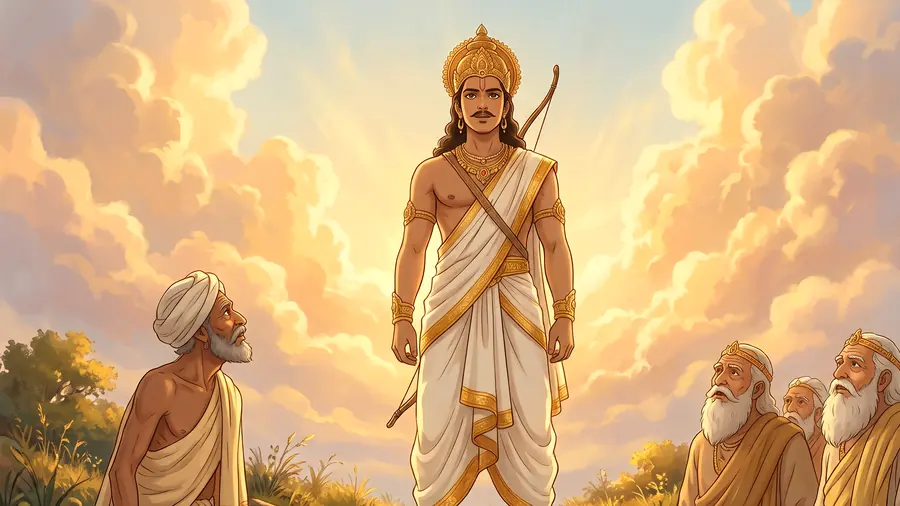
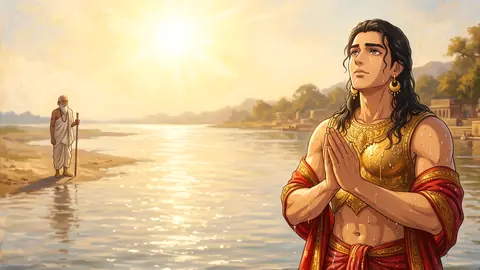
Young Devavrata, crowned and dressed in white and gold with a bow, raises his right hand in a vow on the riverbank at sunset as petals fall from the sky, beside an old fisher-chief.

Mahabharata

Bhishma

भीष्म

Pitamaha · Gangaputra

Bhishma, grandsire of the Kurus, is revered for a vow so terrible it became his name: Ganga’s son Devavrata gave up throne and marriage so his father might wed. Begged to break it, he said, “Truth I would never renounce.”

Read more

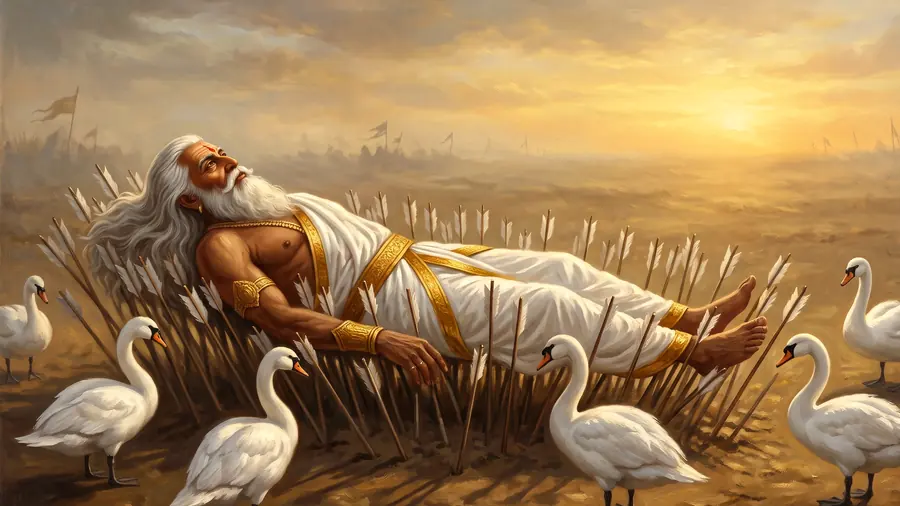
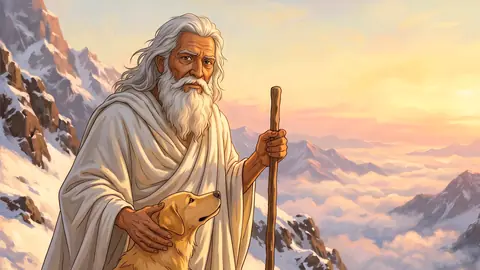
He led the Kauravas ten days, then from his bed of arrows taught Yudhishthira a king’s duties and the thousand names of Vishnu, and left his body only when the sun turned north.

  • 2 stories
  • 18 scenes
  • 18 min read

Follow this path

Bhishma, in reading order through the Vyasa Mahabharata.

Stories with Bhishma (Devavrata)

MahabharataAdi Parva

Bhishma Pratigya: Flowers fell on Devavrata

A scent on the Yamuna, a father’s silence, and a son who gives up a throne, then the sons who might have claimed it.

  • 9 min
  • Sacrifice
  • Duty

MahabharataBhishma Parva

Bhishma on the bed of arrows: A bed of arrows

He told the Pandavas how to bring him down. Then, held above the earth by arrows, he lay there fifty-eight nights and gave up his life only after the sun had turned north.

  • 9 min
  • Resolve
  • Self-control

Names

Bhishma. Also known as: Devavrata, Pitamaha, Gangaputra.

Where this comes from

What this page about Bhishma was checked against: each point, and where it is found.

  1. Of the cursed Vasus, Dyu alone must live long on earth, virtuous, obedient to his father and without children; Ganga says this son is Dyu. Mahabharata (tr. K. M. Ganguli), Adi Parva, Section XCIX
  2. Devavrata renounces the throne and vows brahmacharya; gods, Apsaras and Rishis rain flowers and say “This one is Bhishma (the terrible)”; Santanu grants the boon of death at will. Mahabharata (tr. K. M. Ganguli), Adi Parva, Section C
  3. The “grandsire of the Kurus” protected the army for ten nights and now lies on a bed of arrows. Mahabharata (tr. K. M. Ganguli), Bhishma Parva, Section XIII
  4. Fallen, he does not let his life depart, waiting for the sun’s northern course. Mahabharata (tr. K. M. Ganguli), Bhishma Parva, Section CXX
  5. On the bed of arrows Bhishma agrees to discourse on duty; Yudhishthira asks first about kingly duties. Mahabharata (tr. K. M. Ganguli), Santi Parva (Book 12), Section LV–LVI
  6. After fifty-eight nights on the arrows, when the sun has begun its northward course, Bhishma gives up his life-breaths. Mahabharata (tr. K. M. Ganguli), Anusasana Parva (Book 13), Section CLXVII–CLXVIII
  7. Begged by Satyavati to raise heirs, Bhishma: “I would renounce three worlds, the empire of heaven, anything that may be greater than that, but truth I would never renounce.” Mahabharata (tr. K. M. Ganguli), Adi Parva, Section CIII
  8. Asked by Yudhishthira, Bhishma teaches that one should hymn Vasudeva, the Lord of the universe, “by uttering His thousand names”, praising Vishnu; he recites “these thousand names of Vasudeva” (the hymn tradition knows as the Vishnu Sahasranama). Mahabharata (tr. K. M. Ganguli), Anusasana Parva (Book 13), Section CXLIX

Reading comfort

Text size
Colour

Colour waits while Night Lamp is on.

Motion

Light mode keeps the paintings still, with one slow drift and no depth effect. Easier on older phones and batteries.

Night Lamp

Warm amber text on near-black. Paintings fade slowly and hold still.

Rama turned to his teacher and asked for the knowledge of withdrawal.

Saved on this device.