Spritual
अंग्रेज़ी में पढ़ें आपका पठन
Spritual
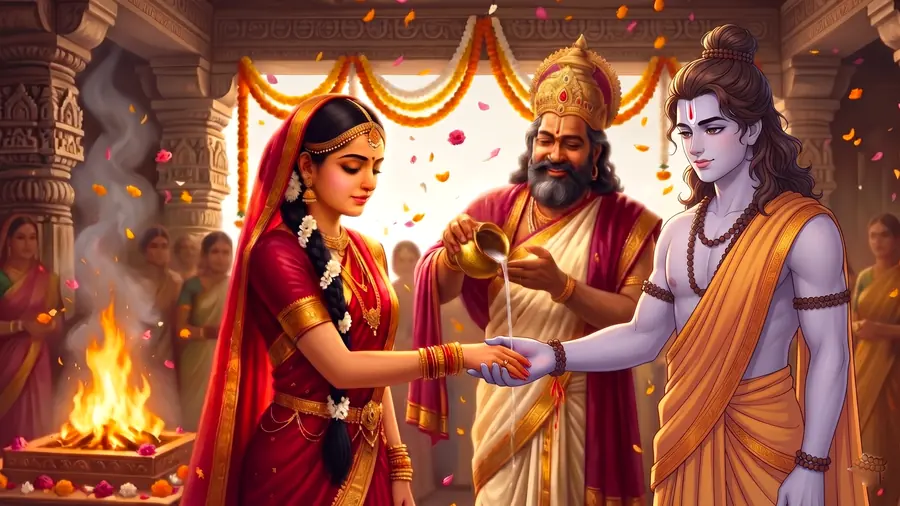
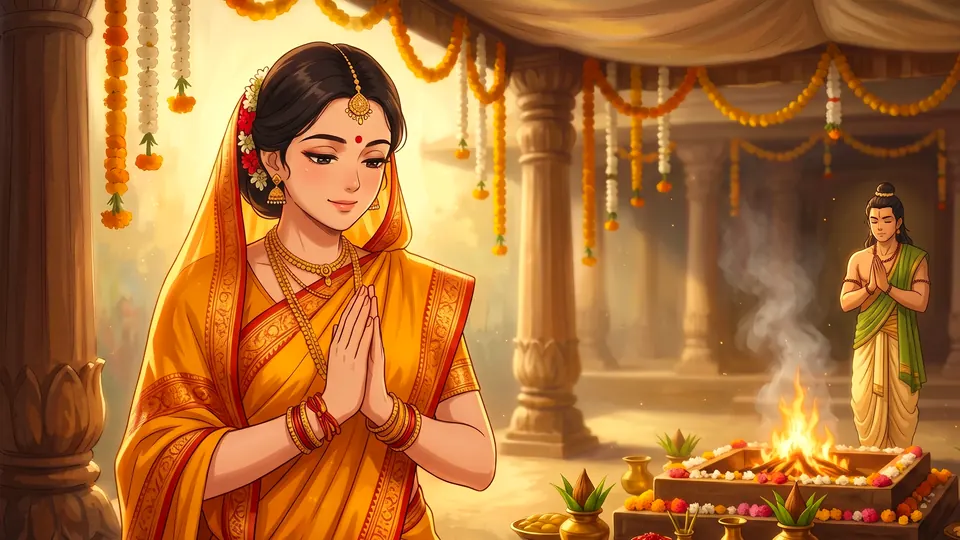
लाल किनारी वाली हल्दी-पीली साड़ी और बालों में लाल-सफ़ेद फूल सजाए उर्मिला मिथिला के मालाओं से सजे मंडप में विवाह-अग्नि के पास हाथ जोड़े, नज़रें झुकाए खड़ी हैं; वेदी के पार हरे उत्तरीय में लक्ष्मण आ रहे हैं।

रामायण

उर्मिला

Urmila

यशस्विनी · प्रियदर्शना

जनक की पुत्री उर्मिला का नाम आते ही वे चौदह वर्ष याद आते हैं, जो उन्होंने लक्ष्मण से दूर बिताए, जब लक्ष्मण वन में राम की सेवा में थे। पिता ने सीता के साथ उनका भी दान किया और यह वचन तीन बार दोहराया; अग्नि-शिखा-सी दमकती उर्मिला ने लक्ष्मण के साथ अग्नि की परिक्रमा की।

आगे पढ़ें

वन में भी सीता ने उन्हें याद किया: मेरी छोटी बहन, साध्वी, प्रियदर्शना। उनकी प्रतीक्षा पर वाल्मीकि मौन हैं; मैथिलीशरण गुप्त ने ‘साकेत’ मुख्यतः इसलिए रचा कि उर्मिला काव्य की उपेक्षिता न रहें।

  • 1 कथा
  • 9 दृश्य
  • 9 मिनट का पाठ

उर्मिला की कथाएँ

रामायणबाल कांड

सीता-राम विवाह: चार वधुएँ, एक अग्नि

थके घोड़ों के साथ दूत अयोध्या पहुँचते हैं: राम ने सीता को जीत लिया है। कुछ दिन बाद मिथिला में चार राजकुमार चार हाथ थामते हैं, और आकाश से फूल बरसते हैं।
  • 9 मिनट
  • आदर
  • आतिथ्य

नाम

उर्मिला। इन नामों से भी प्रसिद्ध: यशस्विनी, प्रियदर्शना।

यह कहाँ से लिया गया है

उर्मिला के इस पृष्ठ की हर बात जिन ग्रंथों से मिलाई गई, वे नीचे हैं। हर बात का पूरा नोट अंग्रेज़ी में है।
संदर्भ देखें (14)
  1. कथा “सीता-राम विवाह” के स्रोत
  2. Valmiki Ramayana, Ayodhya Kanda 2.118.53 (critical edition 2.110.51); Anasuya’s response follows at 2.111.1 (CE)
  3. वाल्मीकि रामायण, बालकांड 1.77.11 (1.77.12 in the IIT Kanpur text)
  4. वाल्मीकि रामायण, अयोध्याकांड 2.11.26 और 2.40.12
  5. वाल्मीकि रामायण, अयोध्याकांड 2.31.22-25
  6. वाल्मीकि रामायण, अयोध्याकांड 2.40.13-17
  7. Valmiki Ramayana, critical edition e-text, GRETIL (searched for ‘ūrmil’)
  8. Mahavir Prasad Dwivedi, Rasajna Ranjan, essay 8, ‘Kaviyon ki Urmila-vishayak udasinata’ (public domain)
  9. Ramchandra Shukla, Hindi Sahitya ka Itihas, Adhunik Kaal, Kavya Khand, Prakaran 2 ‘Nai Dhara’, section on Maithili Sharan Gupt (public domain)
  10. Valmiki Ramayana, Bala Kanda 1.77.12 and Ayodhya Kanda 2.40.16 (IIT Kanpur numbering); Ramchandra Shukla, Hindi Sahitya ka Itihas, Adhunik Kaal, Kavya Khand, Prakaran 2, on Saket; Mahavir Prasad Dwivedi, Rasajna Ranjan, essay 8
हर बात का पूरा नोट (अंग्रेज़ी में)
  1. Second daughter named after Sita; given to Lakshmana; the gift affirmed three times: Valmiki Ramayana, Bala Kanda 1.71.20-22 (sītāṃ rāmāya… ūrmilāṃ lakṣmaṇāya; dvitīyām ūrmilām; trir vadāmi / trir dadāmi). कथा “सीता-राम विवाह” के स्रोत
  2. At the foot of the altar with the other brides, bright as flames: 1.73.15 (Janaka says “my daughters”, plural, of all the brides). कथा “सीता-राम विवाह” के स्रोत
  3. Janaka calls Lakshmana to accept Urmila and take her hand: 1.73.30-31. The couples circle the fire: 1.73.35-39. कथा “सीता-राम विवाह” के स्रोत
  4. Called yaśasvinī (illustrious) when the queens of Ayodhya receive the brides: 1.77.11-12. कथा “सीता-राम विवाह” के स्रोत
  5. “Yashasvini” is the epithet of 1.77.11; “Lakshmana-patni” (wife of Lakshmana) is a plain description, not a quoted epithet. कथा “सीता-राम विवाह” के स्रोत
  6. The title “Priyadarshana” and “my younger sister”: in the forest, telling Anasuya of her wedding, Sita says her father himself gave “my younger sister, the virtuous Urmila, lovely to behold” (mama anujā sādhvī ūrmilā priyadarśanā) to Lakshmana as wife. Valmiki Ramayana, Ayodhya Kanda 2.118.53 (critical edition 2.110.51); Anasuya’s response follows at 2.111.1 (CE)
  7. For the title ‘Yashasvini’: the queens of Ayodhya receive ‘Urmila, the illustrious’ (ūrmilāṃ ca yaśasvinīm). Valmiki Ramayana, Bala Kanda 1.77.11 (1.77.12 in the IIT Kanpur text)
  8. The exile is for fourteen years (nava pañca ca varṣāṇi; caturdaśa varṣāṇi). Valmiki Ramayana, Ayodhya Kanda 2.11.26 and 2.40.12
  9. Lakshmana asks to go as Rama’s attendant (anucara): to walk ahead with his bow, fetch roots and fruit, and do everything while Rama wakes or sleeps. Valmiki Ramayana, Ayodhya Kanda 2.31.22-25
  10. Only Rama, Lakshmana and Sita mount the chariot and leave Ayodhya (‘the three, Sita the third’, sītātṛtīyān); Urmila is not among them, so she stays behind. Valmiki Ramayana, Ayodhya Kanda 2.40.13-17
  11. Valmiki is silent on her waiting: in a full-text search of the critical edition (all seven kandas), Janaka’s daughter Urmila is named only at the betrothal and wedding (CE 1.70.21-22, 1.71.3, 1.72.18; vulgate 1.71-1.73), the homecoming (CE 1.76.9; vulgate 1.77.12) and in Sita’s words to Anasuya (CE 2.110.51; vulgate 2.118.53); CE 1.32.12 is a different Urmila, mother of the gandharvi Somada. Nothing is said of her parting from Lakshmana or of the fourteen years. Valmiki Ramayana, critical edition e-text, GRETIL (searched for ‘ūrmil’)
  12. Urmila is remembered for her fourteen years apart from Lakshmana: Mahavir Prasad Dwivedi’s essay laments that Valmiki and Tulsidas give no word to her parting and calls her giving up her husband to Rama and Sita, soon after her wedding, a self-sacrifice (ātmotsarga) through fourteen years of separation. Mahavir Prasad Dwivedi, Rasajna Ranjan, essay 8, ‘Kaviyon ki Urmila-vishayak udasinata’ (public domain)
  13. Maithili Sharan Gupt wrote Saket mainly so that Urmila would not remain ‘kavya ki upekshita’ (poetry’s neglected one); two whole cantos (9 and 10) are given to her separation. Ramchandra Shukla, Hindi Sahitya ka Itihas, Adhunik Kaal, Kavya Khand, Prakaran 2 ‘Nai Dhara’, section on Maithili Sharan Gupt (public domain)
  14. Stayed in Ayodhya: Valmiki does not say where she spent the fourteen years. She is received into Ayodhya with the other brides (1.77.12) and is not among the three who leave the city by chariot (2.40.16, sītātṛtīyān); Shukla notes that Saket, named for Ayodhya, describes chiefly what happens in Ayodhya and gives two whole cantos (9 and 10) to her separation, and Dwivedi pictures her in the royal palace as Lakshmana leaves for fourteen years. Valmiki Ramayana, Bala Kanda 1.77.12 and Ayodhya Kanda 2.40.16 (IIT Kanpur numbering); Ramchandra Shukla, Hindi Sahitya ka Itihas, Adhunik Kaal, Kavya Khand, Prakaran 2, on Saket; Mahavir Prasad Dwivedi, Rasajna Ranjan, essay 8
इन स्रोतों के बारे में
  • The later, regional tradition of Urmila sleeping through the fourteen years of exile is not in these chapters, and the retelling does not tell it.

पढ़ने की सुविधा

अक्षर आकार
रंग

रात का दीपक जलने तक रंग का चुनाव रुका है।

गति

हल्का मोड: ठहरे हुए चित्र, बहुत धीमा सरकाव, गहराई का प्रभाव नहीं। पुराने फ़ोन और बैटरी पर हल्का।

रात का दीपक

गहरे रंग पर गर्म अंबर अक्षर। चित्र धीरे-धीरे बदलते हैं और स्थिर रहते हैं।

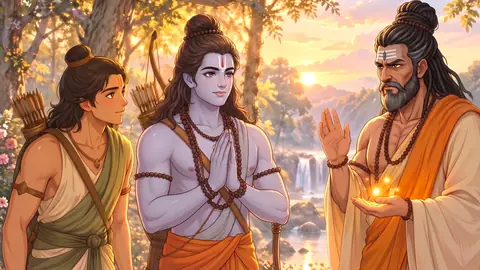
राम ने गुरु से अस्त्रों को वापस लेने का ज्ञान माँगा।

इस डिवाइस पर सहेजा गया।